
Sensory Integration & Sensory Processing Disorder
Every day, a child’s brain sorts a thousand signals at once — sound, touch, movement, light. For most kids, it fades into the background. For some, it doesn’t. Here’s what sensory integration is, what it looks like when it’s off track, and how occupational therapy helps.
What Is Sensory Integration?
Sensory integration is the brain’s job of taking in information from the body and the environment — what we see, hear, touch, taste, and smell, plus two senses most people never learn about: the vestibular sense (movement and balance) and the proprioceptive sense (where the body is in space).
A well-integrated brain filters, organizes, and responds to all of this at once, without the child having to think about it. That’s what lets a kid sit still on a rug during story time, tune out a hallway full of noise, or catch a ball without flinching.
When integration is working well, sensation becomes action — smoothly, automatically, and appropriately. When it isn’t, everyday moments that look simple from the outside can take enormous effort from the inside.
The senses involved: Tactile, Auditory, Visual, Vestibular, Proprioceptive, and Interoceptive (the sense of internal body signals like hunger, thirst, needing the bathroom, and emotions).
Sensory Processing Disorder (SPD)
SPD is a term used to describe when a child’s nervous system has difficulty noticing, organizing, or responding to sensory information in a way that supports everyday activities. It isn’t a matter of behavior or willpower — it’s a difference in how the nervous system processes input. It tends to show up in one of three broad patterns, though many kids show a mix.
Over-Responsive — Sensory Avoiding
The nervous system registers input as more intense than it is, so ordinary sensations feel overwhelming.
— Distressed by tags, seams, or certain fabrics
— Covers ears at everyday noise levels
— Avoids messy play, crowds, or bright light
Under-Responsive — Sensory Seeking
The nervous system needs more input to register a sensation, so the child seeks it out to feel regulated.
— Constant movement, crashing, or spinning
— High pain tolerance, doesn’t notice injuries
— Chews, mouths, or touches everything
Motor-Based — Postural & Coordination
Sensory signals reach the brain but aren’t organized well enough to guide smooth, coordinated movement.
— Clumsy or awkward gait, frequent trips
— Trouble with stairs, buttons, or scissors
— Poor balance or low muscle tone
Sensory Differences can also affect eating and Meal Time. Some children may have strong reactions to textures, smells, temperatures, or mixed foods, making mealtimes challenging and limiting the foods they feel comfortable eating.
These are patterns, not a diagnosis you can make from a checklist. Every child has sensory preferences — SPD is when those differences consistently get in the way of play, learning, friendships, or daily routines. An occupational therapist trained in sensory integration can help you tell the difference.
How Occupational Therapy Helps
1. Observe & Assess
Standardized evaluations plus real-world observation of how your child moves, plays, and reacts to input.
2. Build a Sensory Profile
We map which systems are over- or under-responsive, and how that shows up across home, school, and play.
3. Play-Based Therapy
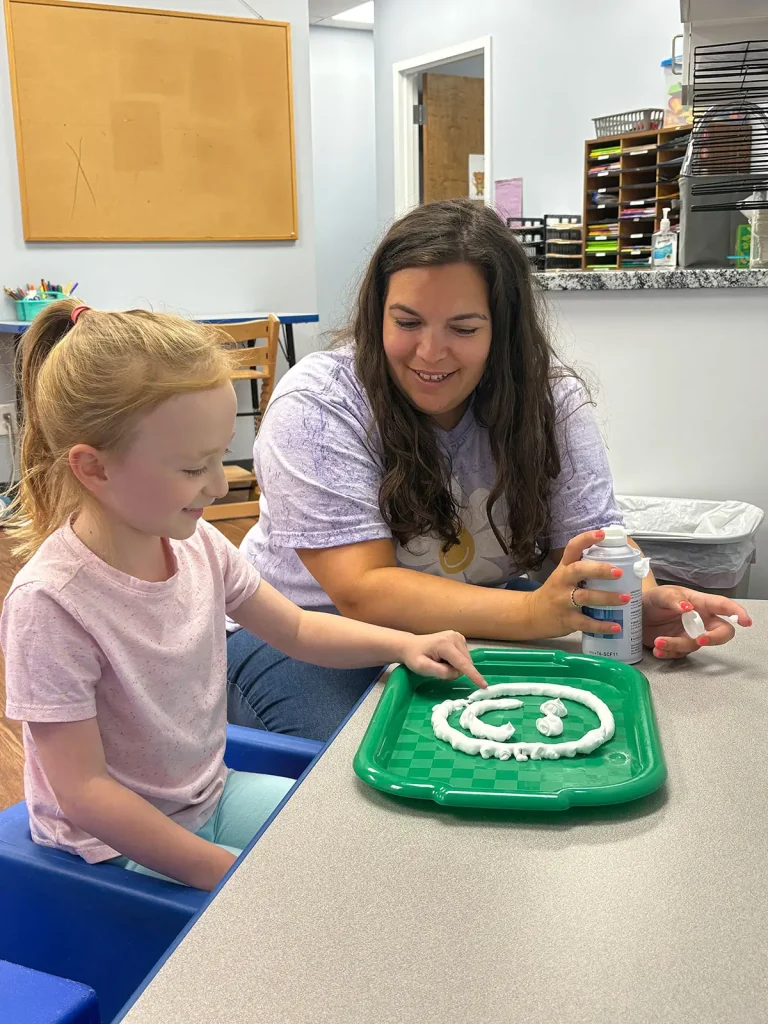
Swings, climbing, textures, and games — carefully graded activity that challenges the nervous system just enough to grow.
4. Carry It Home
Strategies for parents and teachers, so regulation skills built in session hold up in the classroom and at the dinner table.
Pediatric occupational therapists trained in sensory integration don’t just manage symptoms — they use carefully designed, play-based activities to help children develop more effective responses to sensory information and participate more successfully in everyday activities. Over time, families typically see gains in self-regulation, attention, coordination, and tolerance for everyday sensory experiences — getting dressed, eating new foods, handling a noisy classroom, or simply sitting through a meal.
Wondering if this sounds like your child?
A short conversation with one of our therapists can help you understand what you’re seeing and what to do next.